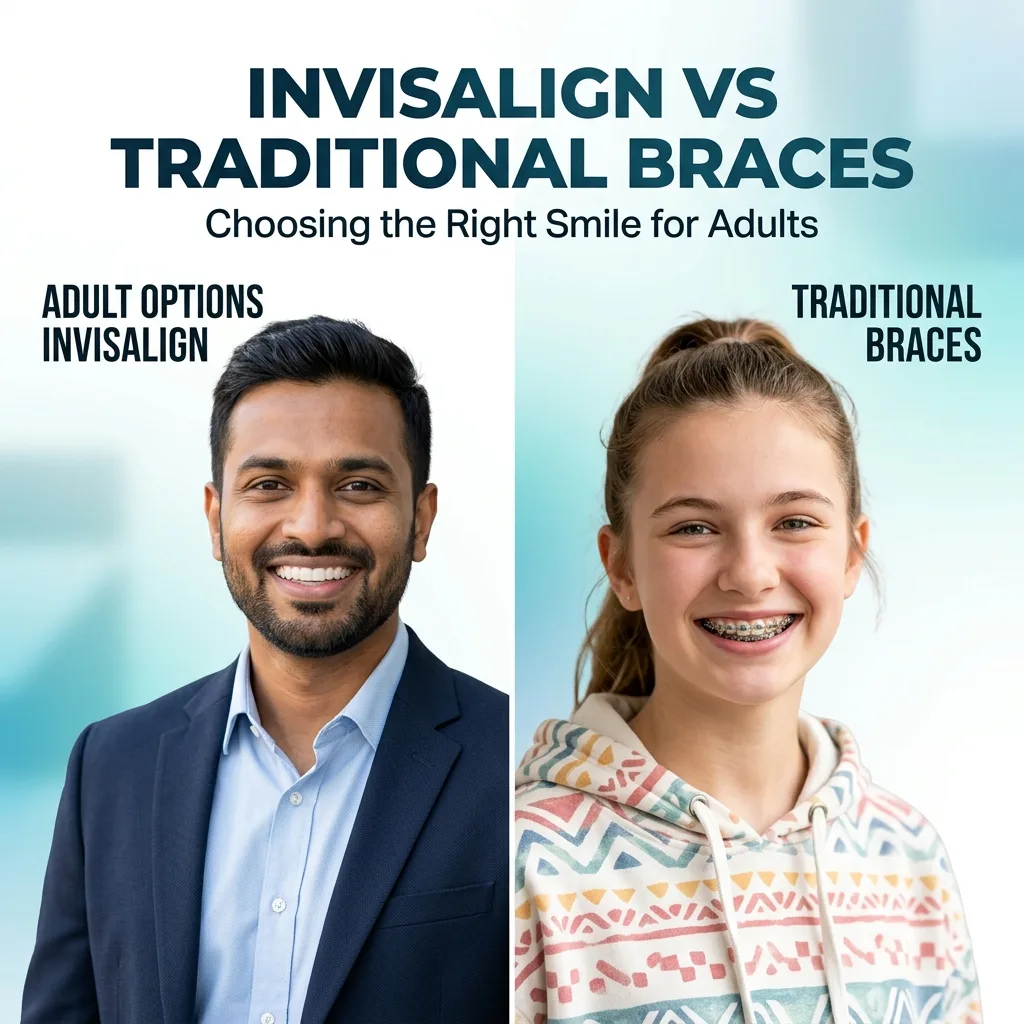
For decades, orthodontic treatment was viewed almost exclusively as a rite of passage for teenagers. If you were an adult with crooked teeth, an overbite, or a noticeable gap, you either accepted your smile permanently or braced yourself for two years of highly visible, metallic "train-tracks" in the boardroom. Today, the landscape of cosmetic dentistry in Hyderabad has completely transformed.
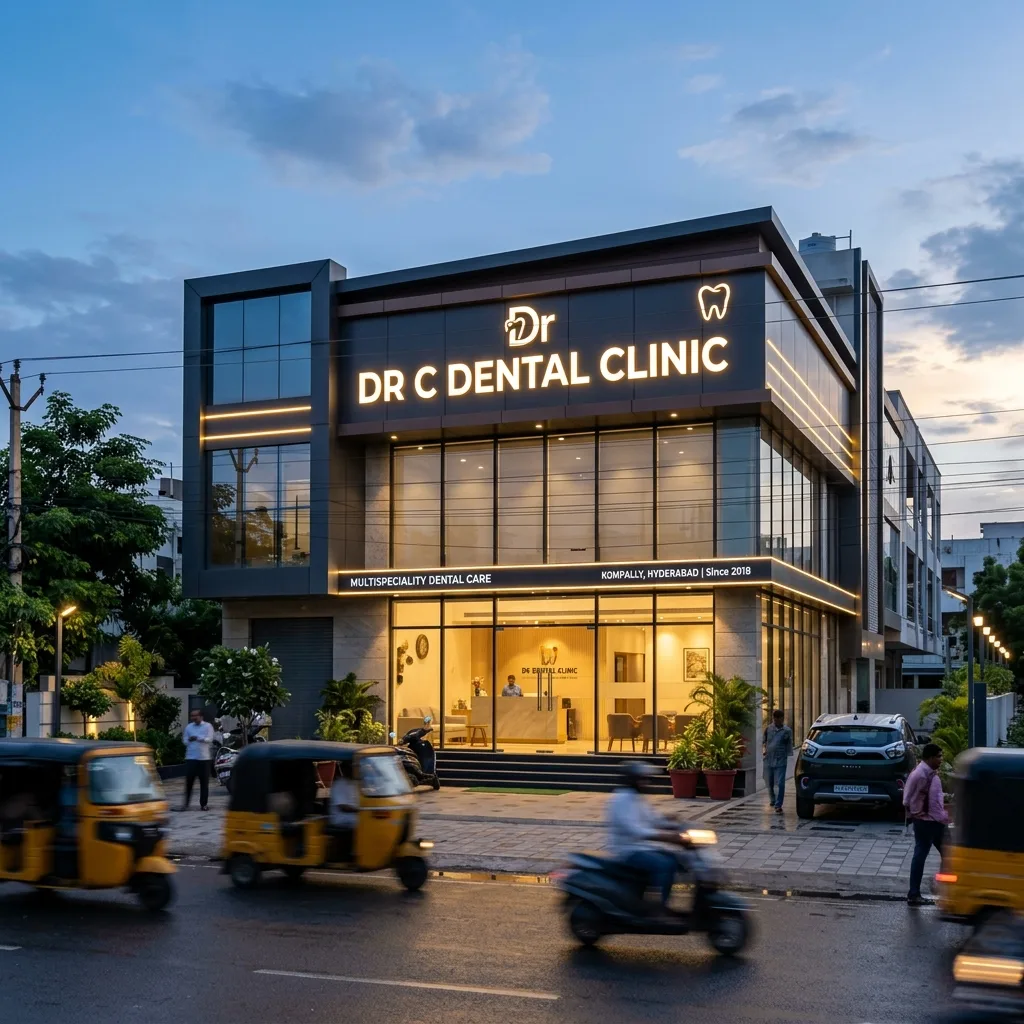
At Dr C Dental Clinic in Kompally, nearly 40% of our orthodontic patients are over the age of 25. High-level executives, brides-to-be, and working professionals are choosing to finally correct their smiles using advanced, invisible orthodontics. The greatest debate we see in our consultation rooms is: "Should I get Invisalign clear aligners or stick with traditional braces?"
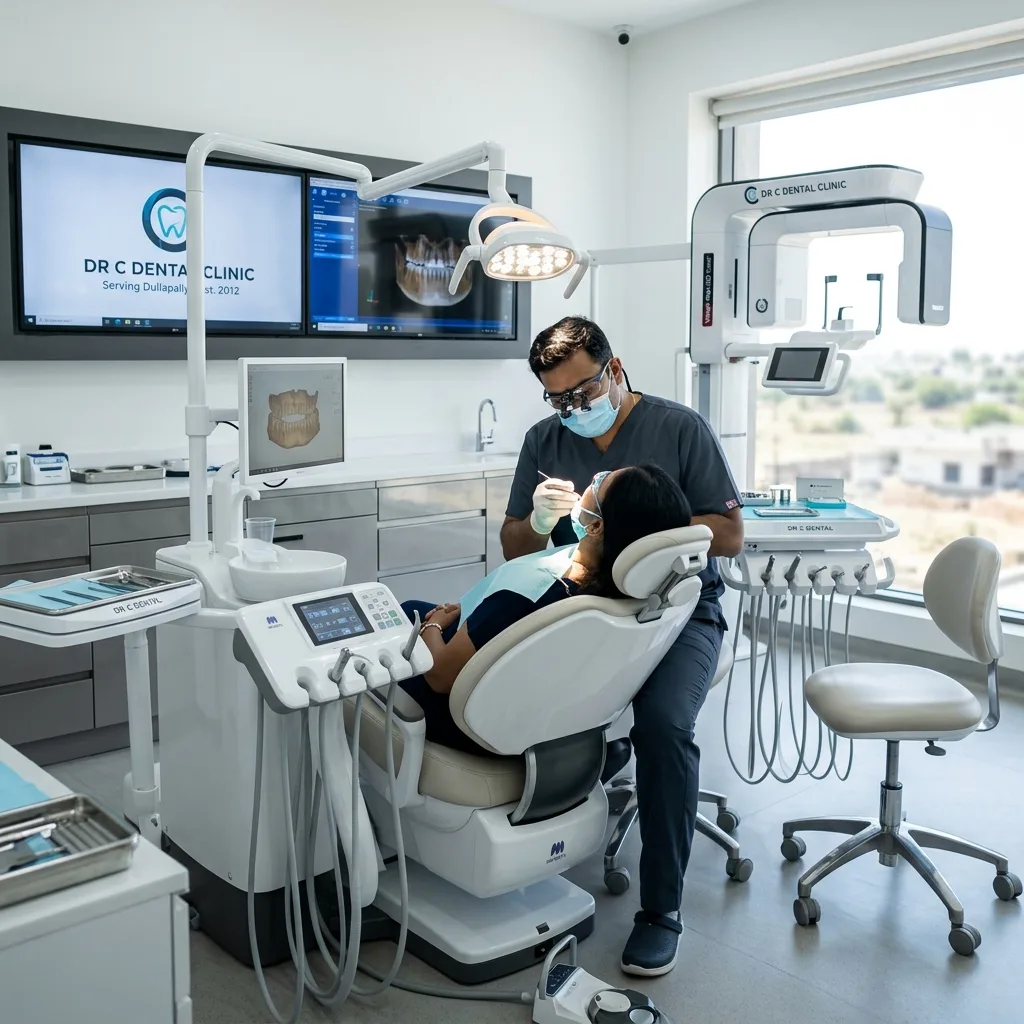
This exhaustive 2,000-word guide breaks down the exact differences between Invisalign and traditional braces, including Hyderabad-specific cost ranges, pain levels, treatment speeds, and how to determine which system fits your specific dental anatomy and lifestyle.
The Hook: Living with Smile Insecurity
Consider "Vikram," a 32-year-old marketing director living in NCL Enclave. Vikram had a severe diastema (a large gap between his two front teeth) and a slight underbite. He spent a decade hiding his teeth during client presentations and refusing to smile broadly in wedding photos. He wanted a perfect smile but absolutely refused to wear metal braces at his age.
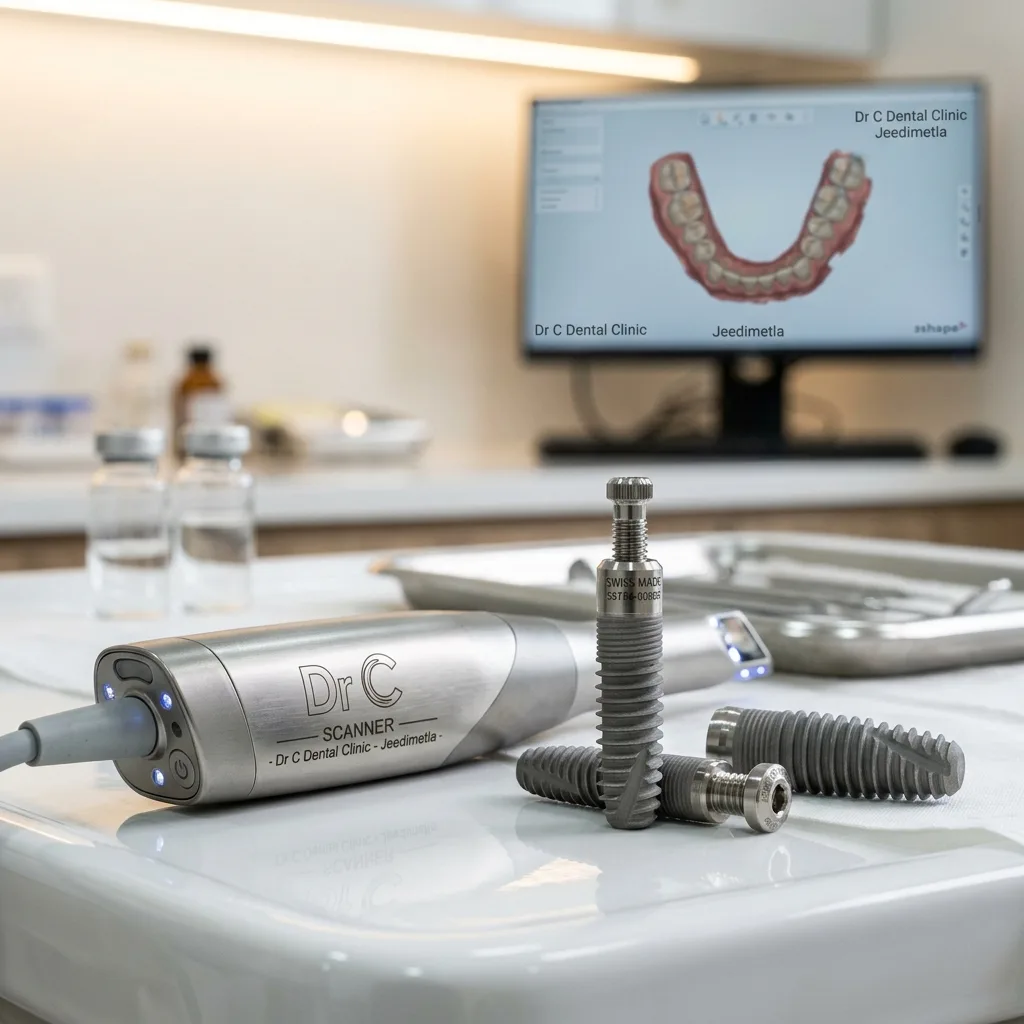
During his consultation at Dr C Dental Clinic, our orthodontist used a 3D intraoral scanner to instantly map his teeth. We loaded his digital file into our Smile Planning software, showing Vikram exactly how his teeth would systematically shift week-by-week using clear aligners. Eight months later, using an advanced clear aligner system, Vikram's gap was perfectly closed. No one at his office ever noticed he was undergoing treatment. He finally had the confidence his career demanded.
Understanding the Two Systems
Before comparing the two, you must understand the underlying mechanics of how teeth move through the jawbone.
What are Traditional Braces?
Traditional braces consist of small brackets (made of metal or tooth-colored ceramic) that are chemically bonded to the front of each tooth. A highly flexible archwire is threaded through these brackets. Over time, the continuous tension from the archwire gently pulls or pushes the teeth into their correct positions. Adjustments are required roughly every 4-6 weeks.
What is Invisalign (Clear Aligners)?
Invisalign (or specialized clear aligners) is a modern, digital approach to orthodontics. Instead of brackets and wires, a computer generates a series of custom-made, perfectly snug, ultra-clear plastic trays. You wear one tray for 10 to 14 days, and it pushes the teeth a fraction of a millimeter. You then switch to the next tray in the series. The trays are completely removable for eating and brushing.
Head-to-Head Comparison: The 5 Deciding Factors
Let’s evaluate these two dominant systems across the five metrics that matter most to adult patients in Kompally and Suchitra.
1. Aesthetics (Visibility)
Braces: Metal braces are highly visible. Even modern ceramic (clear) braces, which blend seamlessly with the tooth, still require a thin wire running across your smile. Within close proximity, people will absolutely know you have braces.
Invisalign: Clear aligners are fundamentally invisible at a conversational distance. Unless someone is staring incredibly closely at your mouth under harsh lighting, they will not see the ultra-thin, matte-finish plastic trays.
Winner: Invisalign.
2. Dietary Freedom & Hygiene
Braces: Because the brackets are permanently glued to your teeth, you have a strict dietary restriction list. You cannot bite into hard apples, chew sticky caramel, or eat popcorn. Furthermore, flossing around traditional braces is a frustrating, 15-minute nightly chore requiring special threading needles.
Invisalign: Total freedom. You simply pop the clear trays out of your mouth, eat whatever you want—steak, nuts, sticky sweets—brush your teeth normally, and put the trays back in.
Winner: Invisalign.
3. Treatment Complexity & Speed
Braces: If you have an exceptionally complex case—such as severe rotation, severe crowding, or a major bite discrepancy where the jaw needs structural realignment—traditional braces are structurally superior. They allow the orthodontist total 3D control to pull teeth in ways plastic cannot. Treatment takes 12 to 24 months.
Invisalign: Excellent for mild to moderate crowding, spacing, and standard bite corrections. However, if your teeth require massive vertical movement, clear aligners may struggle. For eligible cases, aligners can actually be faster than braces, often finishing in 6 to 18 months.
Winner: Tie (Dependent on your specific anatomy).
4. Pain and Comfort
Braces: Metal and ceramic brackets have edges. In the first few weeks, they will inevitably rub against your inner lips and cheeks, causing physical sores until your mouth develops calluses. Additionally, "tightening" days at the clinic can leave your teeth throbbing for 48 hours.
Invisalign: The plastic is laser-trimmed to avoid your gumline entirely. There are no wires to poke your cheeks. While switching to a new tray causes 24 hours of dull pressure, it is far less abrasive than wire tightening.
Winner: Invisalign.
5. Patient Discipline
Braces: Once they are glued on, they are working 24/7. You do not have to think about them. The system works automatically.
Invisalign: For clear aligners to work, you must wear them for 22 hours every single day. If you take them out for a long dinner, leave them out for a party, and forget them overnight, your teeth will shift backwards. The entire multi-lakh investment will fail due to lack of discipline.
Winner: Traditional Braces (For undisciplined patients).
The Breakdown: Costs in Hyderabad (2026)
Cost is the ultimate deciding factor for many adult patients. At Dr C Dental Clinic, we pride ourselves on transparent, highly competitive pricing for premium materials:
- Metal Braces: The standard, heavy-duty option. Highly effective. Total treatment generally costs between ₹30,000 and ₹45,000.
- Ceramic (Clear) Braces: Aesthetic brackets that blend with the tooth. Highly popular for young adults. Costs range from ₹45,000 to ₹65,000.
- Clear Aligners (Indian Brands like Flash or Illusion): Fantastic, budget-friendly options for moderate corrections. Costs typically range from ₹80,000 to ₹1,20,000.
- Invisalign® (USA Premium System): The absolute gold standard of clear aligner technology with decades of patented material science. Costs start at ₹1,50,000 and can reach ₹3,00,000 for highly complex, multi-year cases.
When to Visit an Orthodontist?
Do not wait until a crooked tooth causes permanent uneven wear on your surrounding teeth. Misaligned teeth create hidden "pockets" where your toothbrush simply cannot reach, inevitably leading to decay and gum disease over time. A straighter smile isn't just about vanity; it is fundamentally easier to keep clean and medically healthy.
Why Choose Dr C Dental Clinic in Kompally?
Achieving a perfect smile is an art form driven by medical science. You need an established specialist.
- Specialist Driven: Your journey is managed entirely by an MDS Orthodontist, not a general dentist.
- Digital Scanners (No Goo): We do not use the horrible, gag-inducing pink putty to scan your teeth. We utilize a highly advanced intraoral wand scanner that maps your mouth digitally in 3 minutes.
- 3D Outcome Simulators: Before you spend a single rupee on aligners, we will show you exactly what your final, perfected smile will look like on our monitors.
- EMI & Easy Financing: We offer Bajaj Finance EMI so treatment can be paid for in instalments in Petbasheerabad and Medchal.
Make the Decision For Your Future
Your smile is the first thing people notice during a job interview, a date, or a business meeting. Whether you choose the reliable, automatic power of traditional ceramic braces or the ultra-modern, invisible elegance of clear aligners, the decision to invest in your smile is one you will never regret.