What a Video Dental Consultation Can and Cannot Do
A video consultation is good at answering one question: do I need to come in, and how soon? It cannot answer the question most patients actually want answered: what exactly is wrong with this tooth? Decay between teeth, the depth of a gum pocket, whether a nerve is still alive, a crack under a filling — none of these are visible on a camera, at any resolution, in any light. They need an X-ray, a probe, and a dentist's hands.
Used well, a video call saves a wasted trip through Medchal Road traffic. Used as a substitute for an examination, it produces confident-sounding guesses. Here is where the line sits.
What a video consultation is
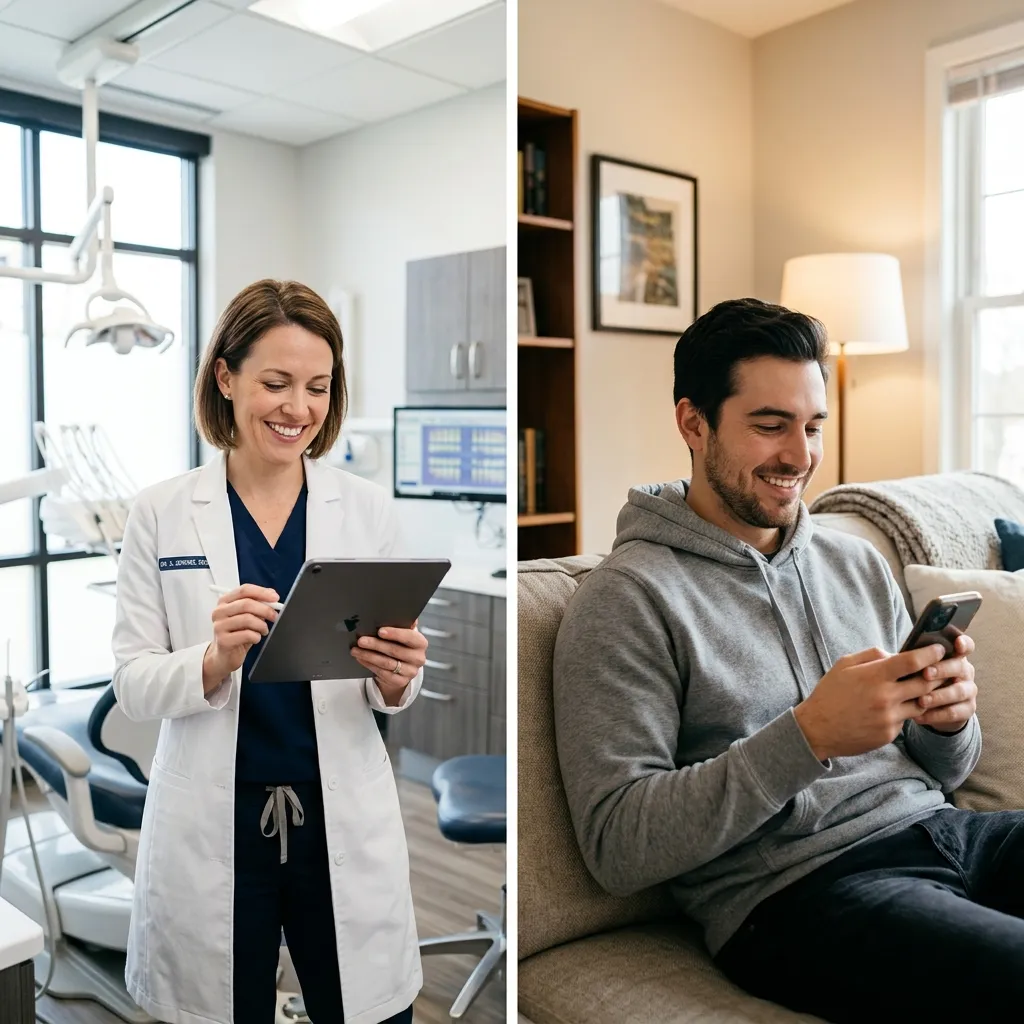
It is a scheduled appointment on a video call, usually fifteen to twenty minutes, often with photographs you have sent in advance. The dentist listens to your history, looks at what you can show them, and tells you one of four things: it can wait until your next routine visit; it needs an appointment this week; it needs to be seen today; or it needs imaging before anyone can say anything sensible. That last answer is a useful outcome, not a failure of the call.
What works well over video
- Triage. You woke up with a swollen cheek, or a filling came out, or a tooth is sensitive to cold. A short call can separate "uncomfortable but stable" from "needs attention today."
- Second opinions on a plan you already have. If another dentist has given you a treatment plan and you have the X-rays or report, a dentist can read them with you and explain what each item is for, what the alternatives are, and what happens if you wait. This is among the most valuable uses of a video call, because the diagnostic information already exists.
- Post-operative check-ins. After an extraction, a root canal, or implant surgery, most follow-up questions are about normal healing — how much swelling is expected, when a stitch should loosen, when a taste or odour matters.
- Orthodontic progress. For braces and clear aligners, a dentist can see whether an aligner is seating fully, whether a bracket has come loose, whether elastics are being worn correctly, and whether you are ready for the next tray. This is a genuine time-saver for patients travelling from Alwal, Suchitra or Quthbullapur.
What a video call cannot do
This section matters more than the one above.
- It cannot diagnose decay. Early and moderate cavities sit between teeth, below the contact point, where no camera can see. A digital RVG X-ray or 3D CBCT scan taken in clinic shows them; a phone photo does not. A tooth that looks perfect on video can have significant decay, and the dark mark worrying you is often only a stain.
- It cannot measure gum disease. Gum health is assessed by probing around each tooth and recording pocket depths, bleeding and recession. Gums can look pink and tidy on camera while bone loss is progressing underneath. If you are worried about your gums, that needs an in-person assessment — see gum and periodontal care.
- It cannot test a nerve. Deciding whether a painful tooth needs a root canal, a filling, or nothing at all depends on vitality and percussion tests done chairside.
- It cannot check your bite. How teeth meet, where they rub and whether you grind are assessed chairside.
- It cannot screen your mouth for serious disease. Any white or red patch, ulcer that has not healed in two weeks, or lump — particularly in anyone who uses tobacco, gutka or paan — needs to be looked at and felt directly. Do not accept reassurance about a lesion over video.
- It cannot treat anything. No cleaning, no filling, no drainage of an abscess. Antibiotics are sometimes appropriate, but they do not cure a dental infection — they buy time before the tooth is treated, and a dentist may reasonably decline to prescribe without examining you.
How to take photographs of your own mouth that are actually useful
Most photos patients send are too dark, too far away, or focused on the lips. A few minutes of preparation changes that.
What you need
A phone, a second person if possible, a torch or a second phone's light, a clean teaspoon handle or fingertip to hold the cheek away, and gauze or tissue.
The method
- Brush first, then wipe the teeth dry with gauze. Saliva hides cracks, white spots and early gum changes.
- Wipe the camera lens. This single step fixes most blurry photos.
- Use the rear camera, not the selfie camera. Have someone else hold the phone, or prop it and use the timer.
- Light from the front, not above: have your helper aim the torch at the tooth while you hold the cheek back.
- Get close, then step back slightly until the phone focuses, and tap the screen on the tooth you care about so focus locks there.
The five shots to send
- Front view, teeth gently together, lips held out of the way.
- Upper arch from below, chin tipped up, showing all upper biting surfaces.
- Lower arch from above, showing all lower biting surfaces.
- Left side and right side, biting together, cheek retracted.
- A close-up of the specific problem — the broken edge, the swelling, the bleeding gum.
A short video panning slowly across the area is often better than a still. Send everything before the appointment rather than fumbling with the camera during the call, and say when the problem started, what makes it worse, and what medicines you take.
When not to book a video call at all
Go straight to a clinic, or to a hospital if you cannot reach a dentist, for swelling that is spreading towards the eye or down the neck, difficulty swallowing or breathing, fever with dental pain, bleeding that will not stop, or a permanent tooth knocked out of its socket. A knocked-out tooth has a short window in which replanting is possible; time spent arranging a call is time lost. These situations are what emergency dental care exists for.
A reasonable way to use it
Treat a video consultation as the first ten minutes of a dental visit, moved somewhere convenient. If a real question remains about a tooth or your gums afterwards, come in and let someone look properly.
To arrange a video consultation, or to book an examination at the clinic in Kompally, get in touch. The clinic is open Monday to Saturday, 10 AM to 8 PM, and Sunday 10 AM to 2 PM by appointment.