Wisdom teeth are the last molars to appear, usually in the late teens or twenties. Many people are told at some point that they should come out, and many others are told they can stay. This guide, written by Dr. Sunnil Chilkuri, MDS (Oral Implantology), at Dr C Dental Clinic, explains how the decision is made, what the procedure involves and how to look after yourself afterwards.
Wisdom teeth do not always need removing
A wisdom tooth that has come through fully, sits in a position where it can be cleaned, and causes no problems does not need to be removed just because it is there. The aim of an assessment is to decide whether the tooth is likely to cause trouble in future, not to remove every wisdom tooth by default. Our wisdom tooth removal page summarises how the treatment is approached at the clinic.
Signs that removal may be advised
- Repeated pain or swelling around a partly erupted tooth, sometimes called pericoronitis.
- Decay in the wisdom tooth or in the tooth in front of it, where the decay cannot be restored or cleaned.
- Gum disease or pockets around the tooth that cannot be controlled with cleaning.
- A tooth that is trapped or impacted and is pressing on the neighbouring tooth or on the jawbone.
- A cyst or other change seen on an X-ray.
- A tooth that is in the way of orthodontic treatment or a planned restoration.
Monitoring rather than immediate removal
Not every impacted wisdom tooth needs to come out straight away. If the tooth is causing no symptoms, the gum around it is stable and there is no bone change on the X-ray, monitoring with periodic reviews is a reasonable option in some cases. The dentist will explain whether the position and angle of your tooth is likely to cause problems in the future, or whether it is one that can safely be observed. Adults in their thirties and forties sometimes have a tooth that has remained impacted for years without causing trouble.
The position of a wisdom tooth matters. A tooth lying on its side, pressing directly into the root of the tooth in front, is more likely to cause problems than one that is simply sitting below the gum in a vertical position. The X-ray taken at the consultation gives the information needed to explain this clearly.
What the consultation includes
The dentist examines the back of the mouth, checks the gums around each wisdom tooth and asks about symptoms. An X-ray, such as an orthopantomogram (OPG), shows the position of the tooth, the root shape and how close it is to the nerve in the lower jaw. In some cases a 3D scan is taken to plan a more complex removal. You should leave with a clear explanation of whether removal is advised and, if it is, what the options are. If you are coming in because of pain or swelling, the guidance under emergency dental care explains what to do before your appointment.
Lower wisdom teeth and nerve proximity
The roots of lower wisdom teeth sometimes lie close to the inferior alveolar nerve, which runs through the lower jawbone and supplies sensation to the lower lip and chin on that side. The OPG X-ray shows this relationship, and in some cases a cone-beam CT scan is taken to map the distance between the root and the nerve canal more precisely.
In the majority of cases the nerve is not affected by the removal. Where the scan shows a root that is very close to or wrapping around the nerve canal, the dentist will explain the small risk of temporary altered sensation and what that would involve in practice. This is one reason a proper assessment before the procedure matters, and why a 3D scan is sometimes taken for lower wisdom teeth before a decision is made.
What happens during removal
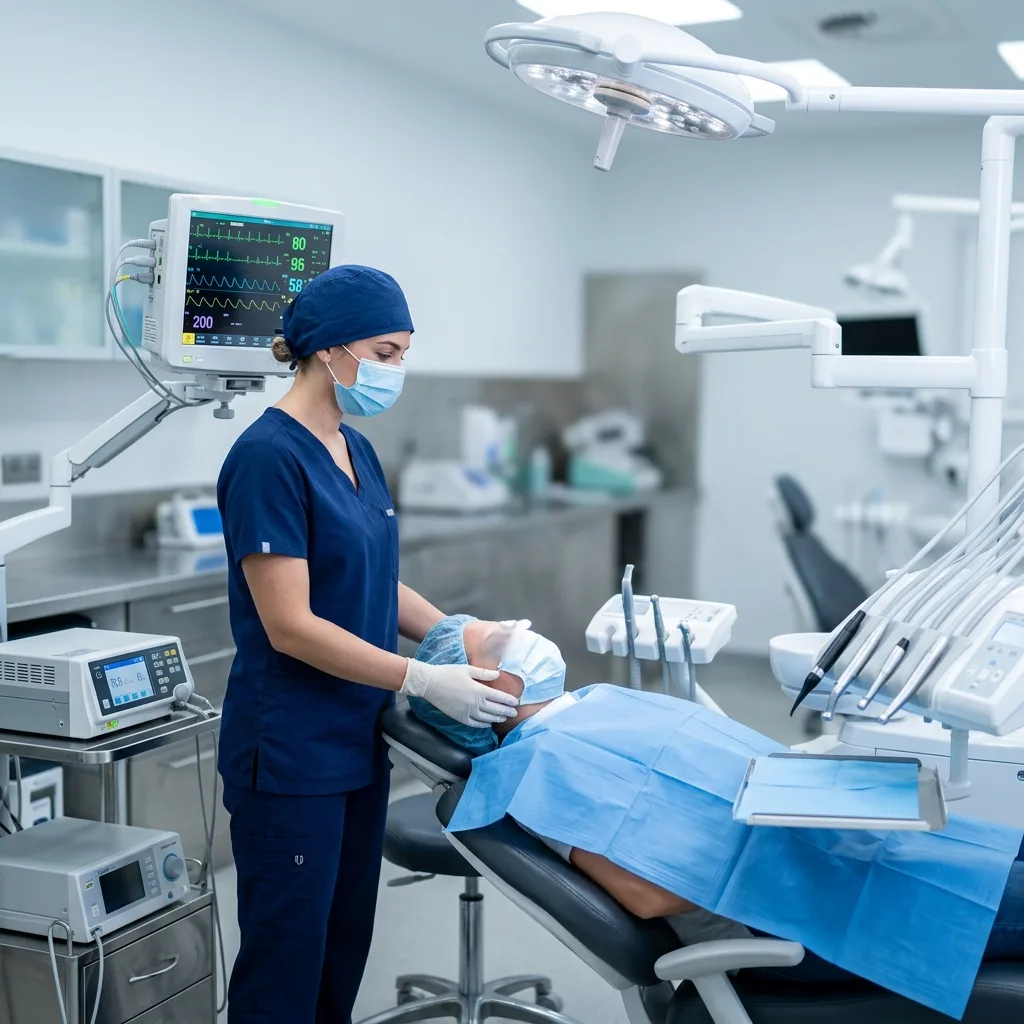
Wisdom tooth removal is usually carried out under local anaesthesia, which numbs the area. Some people are offered sedation if they are anxious. Where the tooth is fully erupted, it may be removed in one piece. Where it is impacted, the gum is opened and some bone may be removed so that the tooth can be divided and taken out in sections. The gum is then stitched, and gauze is placed to control bleeding. The procedure takes longer when the tooth is deeply buried.
Recovery: the first day
- Bite gently on the gauze for the time you are told, usually about 30 to 45 minutes, and replace it if it becomes soaked.
- Rest with your head raised. Avoid heavy exercise.
- Use an ice pack on the cheek in short sessions to reduce swelling.
- Take painkillers as directed on the label or as advised by your dentist.
- Do not rinse vigorously, spit or use a straw.
- Eat soft, cool or lukewarm food only.
Recovery: the days that follow
- Swelling and stiffness of the jaw are normal and usually ease over about a week.
- Gently rinse with warm salt water after meals once you are told it is safe to do so.
- Keep brushing the rest of your teeth, and clean near the site carefully.
- Avoid smoking, alcohol and hot drinks for the first few days, since these slow healing.
- Attend any follow-up appointment, especially if stitches need checking.
Warning signs
Most healing is uneventful, but seek advice promptly if bleeding does not settle after firm pressure, if you have a fever, if pain gets worse rather than better after the first few days, if there is pus or a bad taste, or if you cannot swallow or open your mouth properly. Dry socket, where the blood clot is lost, can cause severe pain a few days after removal and needs to be checked. For swelling spreading towards the eye or down the neck, or difficulty breathing, go to a hospital rather than waiting for a clinic appointment. Our guide to severe tooth pain covers what to do while you arrange to be seen.
Reaching Dr C Dental Clinic
Call +91 96426 56568 or use the contact page to book an examination. The clinic is at Floor 2, Fairmount Square, Medchal Road, opposite CinePlanet, Kompally, and is open Monday to Saturday from 10 AM to 8 PM, and on Sundays from 10 AM to 2 PM by appointment. If you have further questions about oral surgery at the clinic, the MDS Oral Implantology page gives background on the treating dentist.